In France, life expectancy continues to rise, but a gap persists between the number of years lived and the number of years lived in good health. After 60, the question of well-being and health is not just a list of good habits: it involves concrete choices regarding physical activity, diet, medical prevention, and maintaining social connections. Institutional recommendations are evolving, and some recent approaches deserve attention.
Multicomponent physical activity after 65: what the WHO recommendations have changed
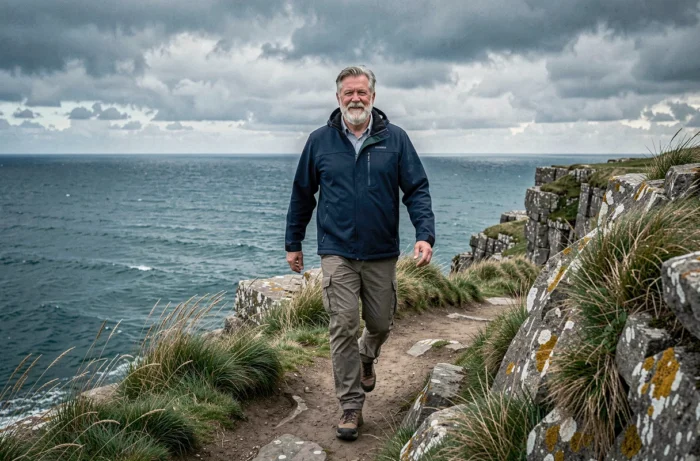
Most guides for seniors recommend walking for thirty minutes a day or swimming regularly. These suggestions remain valid, but they no longer reflect the entirety of current recommendations.
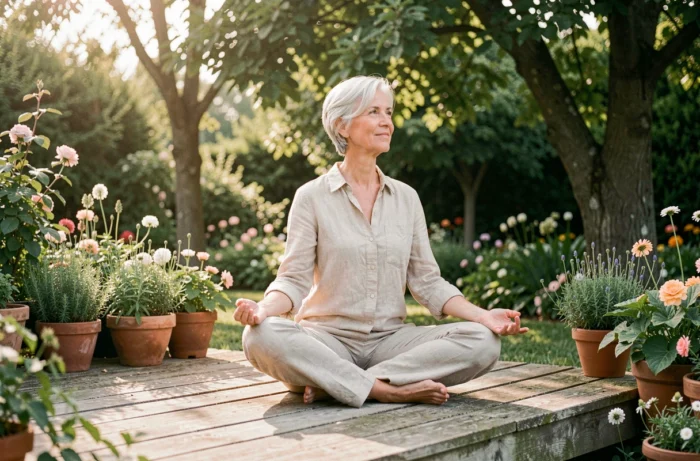
The recent WHO recommendations for those aged 65 and older emphasize multicomponent physical activity at least three days a week. This term refers to the combination, within the same week, of endurance training, muscle strengthening, and functional balance exercises. The goal goes beyond cardiovascular fitness: it is about preserving the ability to perform daily tasks (getting up from a chair, carrying groceries, climbing stairs) and reducing the risk of falls.
Data published by specialized resources, such as the terrevivantesante.fr website for seniors, detail these principles applied to the daily lives of those over 60. The challenge is to move from a logic of “moving a little” to a planning that integrates multiple types of effort.
However, feedback from the field varies regarding the ease of implementation. Accessing an appropriate group class requires a sufficient local offer, an affordable cost, and sometimes prior medical advice. In rural areas or small towns, this offer remains uneven.
Prevention and functional health: the shift of the longevity plan
A report from the Institut Montaigne published in September 2026 proposes the creation of a national health longevity plan, modeled after the cancer plan. The stated goal: to catch up by 2035 with the most advanced countries in terms of healthy life expectancy.
This framework changes the perspective. Rather than measuring health by the absence of disease, it relies on the notion of functional health: the ability to remain autonomous, to maintain cognitive functions, and to sustain an active social life. For people over 60, this means that prevention is not limited to screening for chronic diseases.
What functional prevention covers
- Monitoring hearing and vision, whose gradual decline often goes unnoticed and promotes social isolation
- Regular assessment of balance and muscle strength, two reliable indicators of the risk of loss of autonomy
- Early detection of mild cognitive disorders, before they compromise daily life
The ICOPE program, supported by the WHO and relayed in France by the Retirement Insurance, already offers an assessment of these capabilities. The available data do not yet allow for measuring its large-scale impact across France, but the principle of comprehensive monitoring (not just organ by organ) is gaining traction in public health policies.
Nutrition after 60: beyond generic advice
Classic dietary recommendations (eating a varied diet, limiting salt, consuming fruits and vegetables) apply at any age. After 60, one point deserves particular attention: maintaining an adequate protein intake to preserve muscle mass.
Sarcopenia, which is the progressive loss of muscle related to age, accelerates fragility and increases the risk of falls. It can be combated through physical activity, but also through diet. Animal-based proteins (meat, fish, eggs, dairy products) and plant-based proteins (legumes, whole grains) should be distributed across the three meals of the day, not concentrated in one.
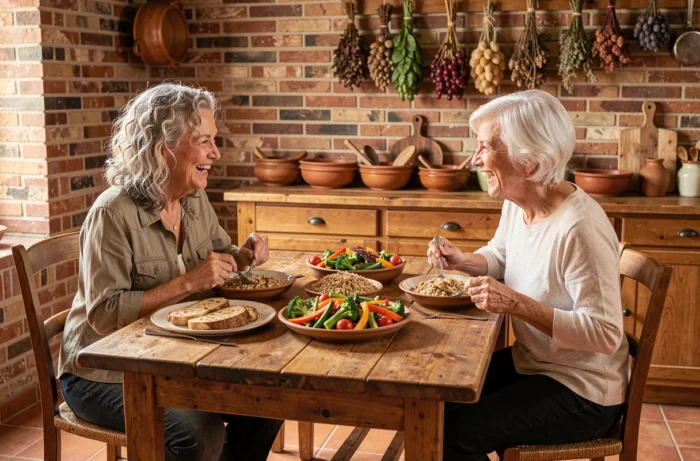
Alcohol consumption is another underestimated topic. The risks associated with alcohol increase with age: more frequent drug interactions, decreased physiological tolerance, and an increased risk of falls. The low-risk consumption guidelines remain the same for the entire adult population, but adherence becomes more critical after 60.
Social connection and mental health: a risk factor in its own right
Social isolation after 60 is not just a comfort issue. Research relayed by the Petits Frères des Pauvres documents the effects of loneliness on health: accelerated cognitive decline, increased cardiovascular risk, and more frequent depressive disorders.
The loss of social connection acts as a risk factor comparable to tobacco or sedentary behavior. This comparison, echoed by several public health institutions, places relational issues on the same level as individual behaviors typically targeted by prevention.
Maintaining this connection requires active efforts: participating in collective activities, nurturing intergenerational relationships, engaging in local associative life. For those facing widowhood, relocation, or the end of their professional life, this reconstruction takes time and sometimes requires support.
- Social centers and community houses offer activities tailored to seniors in most municipalities
- Volunteering provides both a regular social framework and a sense of usefulness documented by research in aging psychology
- Digital tools (video conferencing, messaging) complement physical meetings, provided there is a minimum of support for getting started
Health after 60 is played out on multiple fronts simultaneously. Multicomponent physical activity, functional prevention, a diet attentive to proteins, and the preservation of social connections form a coherent whole. None of these levers is sufficient on its own, and their effectiveness largely depends on access to local resources, a parameter that public policies are just beginning to integrate.