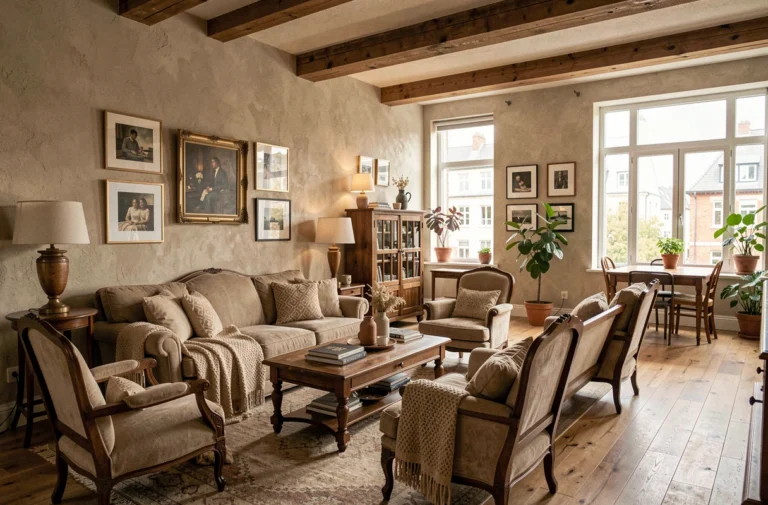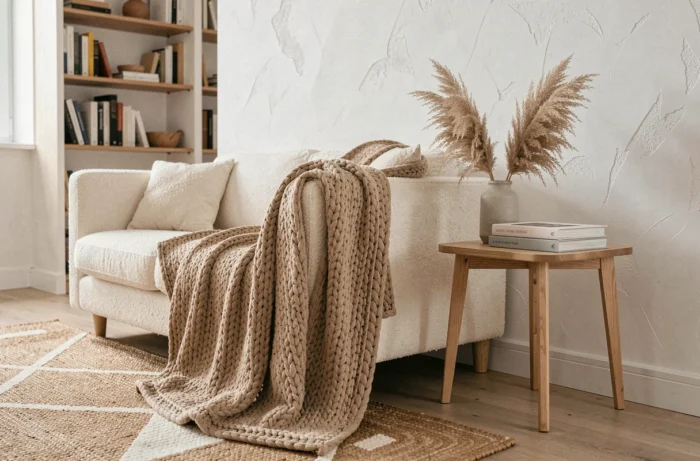
Interior decoration relies on a set of technical choices: materials, finishes, proportions, color palette. Each decision influences the quality of the space on a daily basis, from thermal comfort to air quality. Approaching decor from this functional angle allows for sustainable choices rather than following fleeting trends.
VOC Emissions and Decoration: A Technical Criterion Often Ignored
When discussing decor ideas to enhance an interior, the question of materials often boils down to their appearance. However, the chemical composition of these materials has a direct impact on the air breathed in each room.
Paints, adhesives, particle board, and new furniture can emit volatile organic compounds (VOCs). The French regulatory classification, stemming from the decree of April 19, 2011, assigns an emissions rating ranging from A+ (very low emissions) to C (high emissions). Favoring products rated A+ reduces the concentration of pollutants in the living room, bedroom, or kitchen.
In practical terms, this guides finishing choices: a water-based paint rated A+ is a better replacement for a solvent-based gloss, even if the visual effect differs slightly. Specialized brands like Ego Déco offer ranges that allow for a combination of aesthetic demands and material quality.
Ventilating during and after renovations remains the basic recommendation, but choosing low-emission products beforehand limits the problem at the source. This criterion, absent from most decor guides focused on colors and styles, deserves to be integrated from the design phase.
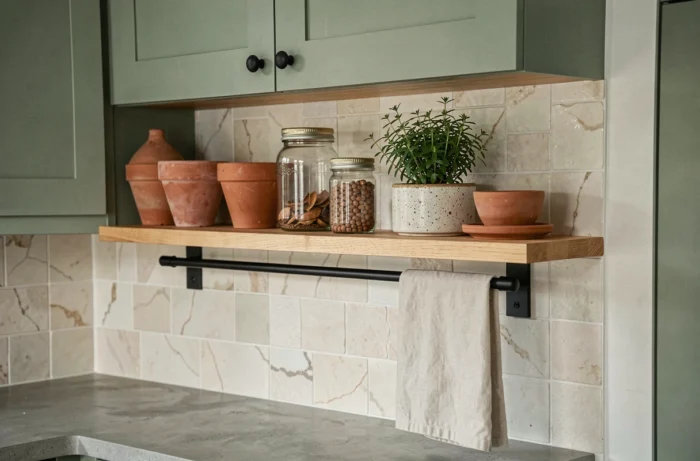
Reuse and Second Life of Objects: A Standalone Decor Approach
Reuse goes beyond simple decorative recycling. It’s not just about sanding an old piece of furniture to give it a vintage look. The current trend, confirmed at the Maison & Objet 2026 fair, positions the transformation and repurposing of existing materials as a creative approach in its own right.
Repairing a solid wood sideboard from the 1970s rather than buying a new particle board piece has a double advantage. The quality of old wood is often superior to that of contemporary entry-level productions. And the restored piece brings a uniqueness that no catalog can replicate.
This logic applies to every room in the house:
- In the kitchen, brass handles salvaged from a flea market piece replace characterless industrial handles, at a comparable cost.
- In the living room, a light fixture made from recycled metal creates a focal point that standardized models do not provide.
- In the bedroom, a restored wooden bed frame, sanded and treated with a water-based finish, combines aesthetics and low emissions.
Desirable design, as advocated by studios like Frgmnt, is based on this idea: an object that has already lived carries a visual density that new items take years to acquire.
Color Palette and Natural Materials: Sustainable Choices for Every Room
Deep hues dominate current decor trends. Bordeaux, chocolate brown, and dark greens are gradually replacing off-whites and light grays that have saturated interiors for a decade.
These colors work better on raw materials. A wall coated with lime plaster tinted in the mass absorbs light differently than a wall painted with a roller. The result is deeper, more vibrant, and the material itself becomes a decorative element.
Wood as the Common Thread of Interior Space
Walnut and dark woods are making a strong comeback in furniture. Their dense grain and warm tones anchor a space without needing additional accessories. A solid walnut tabletop in a dining room is enough to visually structure the room.
The choice of certified or recycled wood is not just an ecological argument. Species from controlled supply chains exhibit superior drying and stability characteristics, reducing the risk of deformation over time.
Finishes and Coatings: Balancing Style and Air Quality
Tiles, used from floors to walls, offer an inert surface that does not emit VOCs. In a kitchen or bathroom, it’s a choice that combines hygiene, durability, and aesthetics. Large formats, laid with thin joints, create a visual continuity that enlarges the space.
For living spaces like the living room or bedroom, low-emission panels and natural coatings are alternatives to vinyl wallpapers, which are often more emissive.
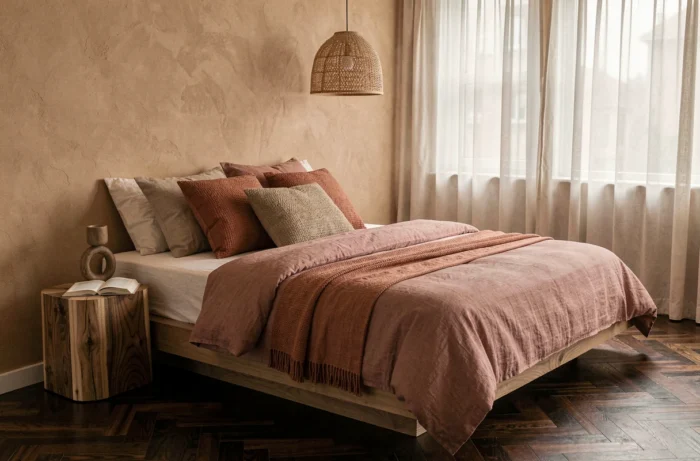
Fewer Pieces, Better Chosen: Decoration by Subtraction
The underlying trend in interior decoration is moving away from accumulation. A few well-designed pieces in durable materials replace dozens of interchangeable decorative accessories.
This principle of subtraction is not about strict minimalism. It’s about concentrating the budget on key pieces:
- A sofa with a solid wood frame and certified fabric covering, rather than two foam and polyester sofas.
- A unique designer light fixture instead of five generic light sources.
- A recycled wood table with a raw metal base, rather than a matching table and chair set.
Every object retained in the space must justify its presence through its function, quality of craftsmanship, or history. This simple filter allows for the creation of coherent interiors without the need for an interior designer.
Decoration that lasts does not follow a seasonal trend. It relies on healthy materials, objects chosen for their intrinsic quality, and attention to what we breathe as much as to what we see. It is this technical approach, applied room by room, that transforms an interior sustainably.