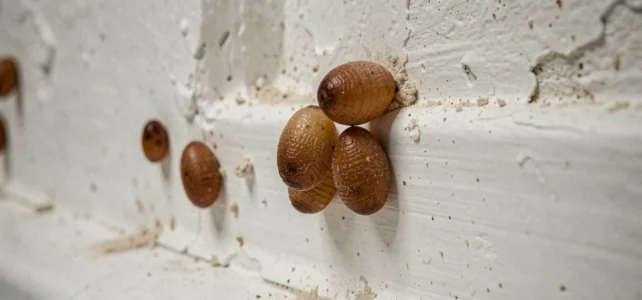
A fly pupa is the hard, brown, barrel-shaped casing in which a maggot completes its metamorphosis into an adult insect. Finding these capsules stuck to a wall or ceiling indicates that a complete reproductive cycle has taken place nearby. The presence of pupae is not linked to a hygiene issue, but it signals an organic source being exploited by flies somewhere in the dwelling.
Metamorphosis Cycle: Why the Pupa is Found High Up
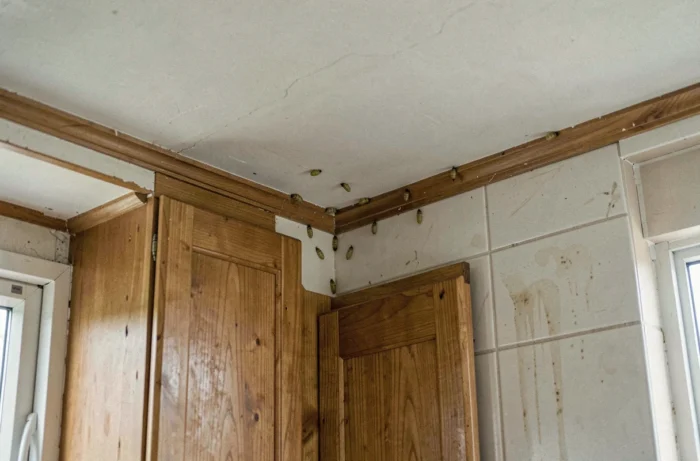
The fly larva (maggot) feeds on moist organic matter for a few days. When it reaches its final stage, it leaves the food source and seeks a dry place to transform. This migratory behavior explains the presence of pupae on walls or ceilings, sometimes several meters away from the breeding site.
The larva’s cuticle hardens and forms the puparium, this protective brown or black shell. Inside, the insect undergoes a complete reorganization: larval structures are dissolved, and adult organs (wings, legs, compound eyes) are formed. This process lasts a few days depending on the ambient temperature.
An empty pupa, punctured with a circular hole at one end, means that the adult fly has already emerged. An intact and closed pupa still contains the transforming insect. This distinction helps assess whether the infestation is recent or resolved. You can find more information on Inside Out regarding the visual identification of these capsules.
House Fly or Psychodid: Identifying the Species Changes the Response
Not all pupae on a wall tell the same story. A large brown pupa a few millimeters in size usually comes from the common house fly (Musca domestica) or a blow fly (Calliphoridae). In this case, the breeding site is often food waste, indoor compost, or, more rarely, a dead animal in a cavity.
Smaller pupae, associated with tiny moths with hairy wings resting on bathroom walls, indicate drain flies (family Psychodidae). Their larvae live in the organic sludge accumulated in traps and pipes. This distinction has a direct health implication.
Psychodids: An Underestimated Health Risk
Drain flies are now considered a real health hazard. Their larvae develop in contaminated organic residues, and adults carry these contaminants onto surfaces where they land. Food left nearby can become contaminated.
Studies have been ongoing since 2024-2025 to determine whether these psychodids can transmit pathogens beyond simple gastroenteritis. This heightened scientific vigilance goes beyond what typical content on “gnats in the house” mentions. If your pupae are associated with these small hairy flies, cleaning the pipes becomes a priority.
Locating the Breeding Site from Pupae on the Walls
The position of the pupae in the dwelling provides clues about the location of the breeding site. Larvae only travel a few meters before settling down to pupate. A wall covered with pupae in the kitchen points to food waste or compost. Pupae in the bathroom indicate pipes or overly damp indoor plant soil.
- Pupae near the sink or trash can: check garbage bags, food scraps forgotten under furniture, and the sink trap
- Pupae in the bathroom or laundry room: inspect shower and sink traps, degraded seals, and any stagnant water points
- Pupae on the ceiling of a room without an obvious source: suspect a dead animal in the attic, behind a wall, or in a ventilation duct
- Pupae near indoor plants: overly moist potting soil attracts fungus gnats (soil flies), whose larvae pupate on the substrate surface or the pot walls
The absence of a visible source in the room where the pupae are located does not mean the breeding site is far away. It may be hidden behind a baseboard, under a peeling covering, or in a technical duct.
Eliminating Pupae and Breaking the Reproductive Cycle
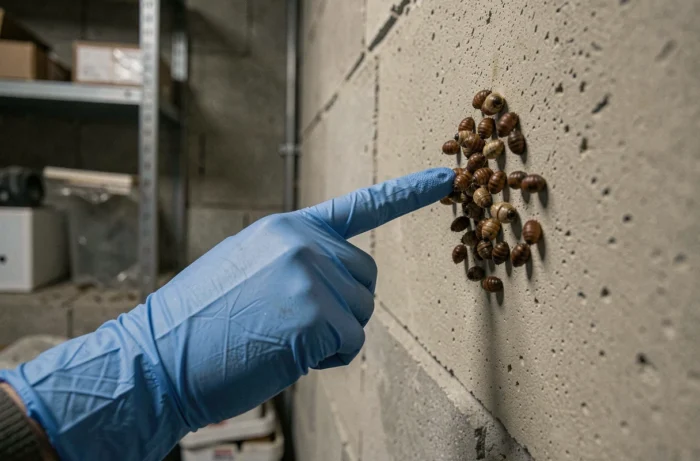
Removing the pupae from the wall or ceiling with a damp cloth or vacuum eliminates the visible nuisance, but does not resolve anything if the breeding site remains active. Removing the organic source is the only action that permanently stops the infestation.
Targeted Actions Based on the Type of Breeding Site
For a breeding site related to food waste, emptying and cleaning the trash can, removing any accessible organic remains, and sealing the bags tightly is generally sufficient to break the cycle within a few days.
For a breeding site in the pipes, mechanical cleaning of the trap (scrubbing, removing the organic sludge plug) is more effective than simply pouring a chemical down the drain. Biofilms lining the pipe walls resist conventional drain cleaners. Scrubbing with a fine drain brush, followed by rinsing with very hot water, removes the larval substrate.
- Physically scrub shower, sink, and drain traps at least once a month during warm periods
- Let water run regularly in rarely used pipes to prevent the trap from drying out and the accumulation of deposits
- Reduce the moisture of indoor plant soil and allow the surface to dry between waterings to discourage fungus gnats
For a suspected dead animal in an inaccessible cavity, locating it may require the intervention of a pest control professional who uses inspection cameras or relies on the concentration of adult flies to pinpoint the entry point.
Insecticides: Limited Use Against Pupae
The puparium protects the developing insect like armor. Contact insecticides do not reach the larva inside the pupa. Spraying an aerosol on pupae fixed to the wall has no effect on the ongoing metamorphosis. These products only act on adult flies that have already emerged, which only addresses the symptom.
Finding fly pupae on a wall or ceiling does not call for panic, but rather a methodical inspection of the room and adjacent areas. The presence of empty pupae without new appearances for several days indicates that the episode is likely over. Fresh pupae that renew signal an active breeding site waiting to be located.