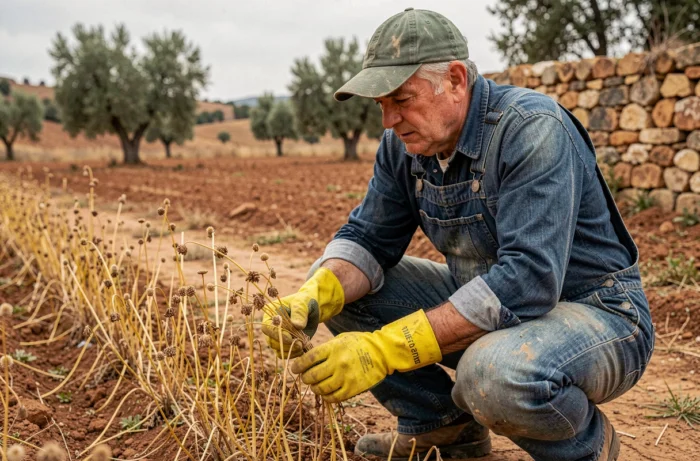
You garden near the Spanish border and have heard about Roundup Ultra Plus sold freely on the other side of the Pyrenees. The product contains 36% glyphosate in the form of potassium salt, a concentration that ranks it among the most powerful professional herbicides on the market.
In France, the sale of glyphosate to individuals has been banned since 2019. In Spain, the same product remains approved and accessible. This regulatory gap creates a gray area that many explore without measuring the consequences.
European approval and national authorization of Roundup: two distinct mechanisms
Many gardeners believe that a product authorized in one EU country is automatically authorized everywhere. This shortcut is incorrect. The European Union approves the active substance (here glyphosate), but each member state then issues its own market authorizations for commercial products.
Roundup Ultra Plus is registered in Spain under the registration number ES-00725, with a “vigente” (valid) status. This Spanish authorization sets specific conditions: target crops, maximum doses, application periods, distances from sensitive areas. A briefing from the European Parliament published on September 1, 2026, reminds us that national authorizations can be revised, amended, or withdrawn if safety conditions are no longer met.
In other words, a product that is “vigente” today can lose its authorization tomorrow. The Spanish register is not a permanent guarantee. It reflects a regulatory state at a given moment, subject to regular reevaluation.
To better understand the use of Roundup Ultra Plus herbicide in Spain, it is necessary to distinguish what the label actually allows from the uses that buyers make of it.
36% glyphosate potassium salt: what the formulation changes concretely
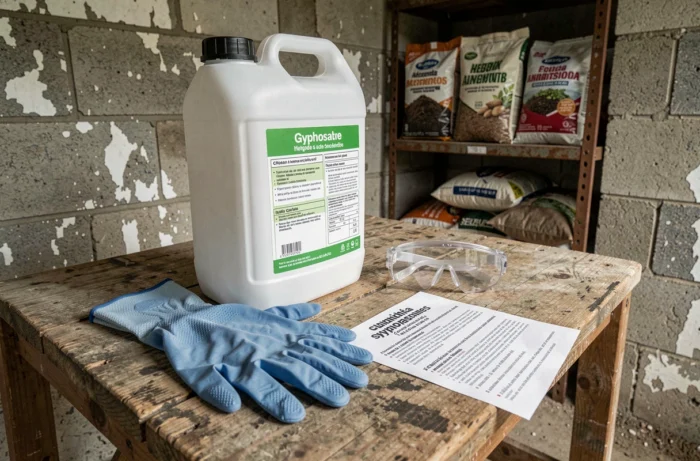
Why talk about “potassium salt” rather than just glyphosate? Because the nature of the salt modifies the behavior of the product. Pure glyphosate is a poorly soluble molecule. To make it usable in spraying, manufacturers transform it into salt (potassium, isopropylamine, or ammonium).
The potassium salt used in Roundup Ultra Plus penetrates leaves more quickly than other forms. This speed of absorption partly explains the product’s effectiveness, but it has a downside: the co-formulants associated with potassium salt pose their own toxicological questions.
An herbicide is never composed solely of its active substance. It contains adjuvants (surfactants, solvents) that facilitate adherence and penetration. These co-formulants are not always evaluated with the same rigor as glyphosate itself. This is a point that public debates often overlook: the commercial product is more complex than its active substance.
Bringing Roundup from Spain to France: real legal risks
The temptation is strong. The product is inexpensive, easily found in agricultural cooperatives or Spanish DIY stores, and no particular documents are required for purchase.
However, importing a plant protection product that is not authorized in France constitutes an offense. The French rural code provides for penalties that can reach significant fines and confiscation of the product. In December 2023, a police operation in Castres highlighted a network of online resale of Spanish pesticides, with significant volumes seized.
Controls remain infrequent at land borders. This reality fosters a sense of impunity. Here’s what you concretely risk:
- Systematic confiscation of the product if detected by customs or the OFB (French Office for Biodiversity)
- Fines that can reach several thousand euros depending on the volumes transported, with the legal framework distinguishing between small quantities and bulk imports
- Possible criminal prosecution in case of resale, with heavier penalties than for simple personal use
The French Office for Biodiversity has been monitoring online sales platforms for several years. Sellers operating from the Spanish Basque Country have been identified and prosecuted by the French justice system.
AMPA and water contamination: the invisible danger of glyphosate
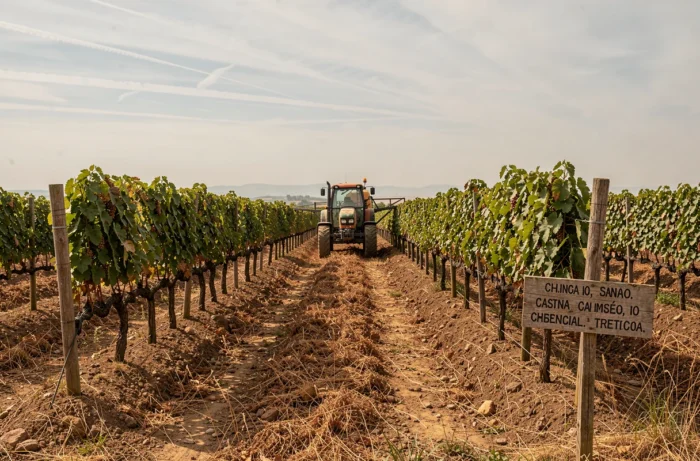
Glyphosate degrades in the environment into a molecule called AMPA (aminomethylphosphonic acid). This molecule is regularly detected in surface and groundwater, both in France and Spain.
Have you noticed that debates about glyphosate almost exclusively focus on the parent molecule? AMPA, its main metabolite, receives less media attention even though it persists longer in soils and aquifers.
The Anses (National Health Security Agency) assesses the risks associated with glyphosate-based products and publishes data from its phytopharmacovigilance system. AMPA is among the most frequently found substances in water analyses in agricultural areas.
The unregulated use of Roundup Ultra Plus by individuals, without respect for spraying distances or the weather conditions specified on the label, amplifies this contamination risk. Regulated professional use limits dispersion, while amateur use in private gardens multiplies it.
Weeding without glyphosate: methods that work
Giving up glyphosate does not mean letting weeds take over a plot. Several techniques offer concrete results, provided one accepts a different level of effectiveness:
- Thermal weeding (flame or steam) destroys the aerial part of plants. Several passes are necessary to exhaust root reserves
- Pelargonic acid, allowed in France for individuals, acts by contact on the foliage. Its effectiveness remains limited to annual plants with shallow roots
- Thick mulching (wood chips, straw, burlap) prevents germination by blocking light. This is the most sustainable method for flower beds and vegetable gardens
- Mechanical weeding (hoe, cultivator) remains the simplest action for small areas, with no environmental impact
None of these alternatives replicate the systemic effect of glyphosate, which destroys the plant down to the root in a single application. But the absence of chemical residues in the soil more than compensates for the need to repeat interventions.
The choice of Roundup Ultra Plus in Spain is based on an immediate effectiveness calculation. The complete calculation, however, includes the legal risk in case of import, soil contamination by AMPA, and the existence of compliant alternative methods on both sides of the border. Each gardener makes their own assessment, but they benefit from making informed choices.