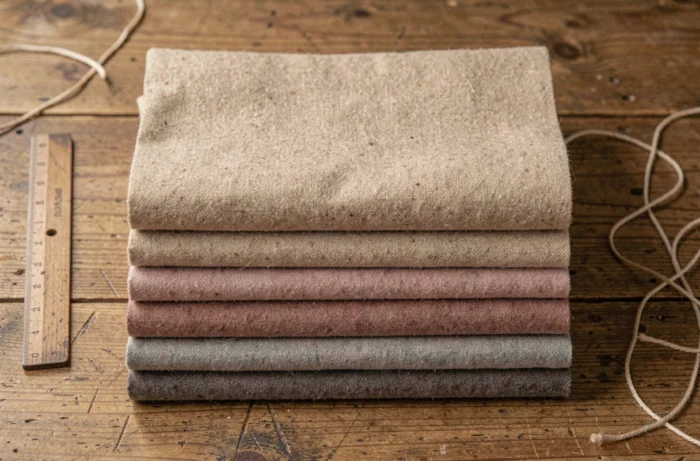
A sheet that itches after three washes, a shirt that pills after the first season: the problem rarely lies with the cotton itself, but with how the fabric was made. Cotton flannel is appealing for its velvety touch and warmth, but not all products labeled “100% cotton flannel” are created equal. Understanding what distinguishes durable flannel from mediocre flannel helps avoid costly disappointments.
Fiber Length and Pilling: The Criterion That Labels Don’t Show
Have you ever noticed those little fiber balls that appear on a sheet or flannel shirt after a few uses? This phenomenon is called pilling. It is directly related to the quality of the yarn used.
A cotton yarn is made up of twisted plant fibers. Short fibers have more ends sticking out of the yarn, and these ends catch on each other due to friction. The result: pills form quickly on the surface of the fabric.
In contrast, long-fiber cotton produces a smoother, more uniform yarn. The brushed surface of the flannel stays soft longer because the fibers raised by the brushing hold better in place. When choosing between two flannels at the same price, look for mentions regarding fiber length or pilling resistance rather than just the indication “100% cotton.”
To better understand what distinguishes cotton flannel fabric from regular cotton, it’s important to remember that flannel is a finishing process, not a fiber. Mechanical brushing raises the fibers at the surface of the woven fabric, creating that characteristic fuzzy texture. This process amplifies the qualities of the original yarn, but also its flaws.

Weight and Insulation: Adapting Cotton Flannel to Its Use
Flannel is often associated with winter and warmth. This is justified, but with a nuance: the weight of the fabric determines the actual level of insulation. A lightweight brushed fabric remains flannel, but it won’t keep you as warm as a denser version.
For bedding intended for cold months, a sufficiently dense weight offers good insulation without needing additional blankets. For a shirt worn year-round, a lighter weight maintains the softness of the touch without causing overheating.
Flannel for Clothing or Flannel for Sheets: Not the Same Specifications
A sheet undergoes frequent washing, repeated friction, and must remain dimensionally stable. A flannel shirt, on the other hand, must retain its flexibility and drape after dozens of machine washes.
- For sheets and bedding, prioritize a dense weight and long-fiber cotton. Resistance to shrinkage after washing is a determining factor.
- For shirts and clothing, a moderate weight is sufficient. The flexibility of the fabric and its ability to maintain its shape are more important than raw warmth.
- For accessories (scarves, linings), softness is paramount. Pilling is less of an issue as friction is limited.
Drying Cotton Flannel: The Constraint That Many Underestimate
Flannel retains more moisture than a finer bed fabric. This is a direct consequence of its brushed surface, which traps water between the raised fibers. This particularity has concrete consequences at drying time.
An overloaded dryer drum prevents air from circulating properly around the fabric. Flannel stays damp longer, increasing the risks of shrinkage and stiffening. Marked creases may also appear, which are difficult to eliminate later.
The safest setting is moderate heat with a loosely packed load. Remove the laundry as soon as it is dry to avoid static electricity. If air drying, lay the pieces flat or on a wide drying rack to limit distortions.
Textile Certifications: OEKO-TEX and REACH Do Not Guarantee the Same Thing
A cotton flannel sheet remains in prolonged contact with the skin for hours every night. The issue of residual chemicals deserves attention.
You have probably seen the OEKO-TEX STANDARD 100 label on bedding packaging. This voluntary certification checks for the absence of harmful substances in the finished product. It is a good indicator, but OEKO-TEX does not replace compliance with the European REACH regulation.
REACH is a legally binding framework that imposes restrictions on the chemicals used in products sold in Europe. A fabric can comply with REACH without bearing the OEKO-TEX label, and conversely, an OEKO-TEX product remains subject to REACH obligations.
- OEKO-TEX STANDARD 100: voluntary certification, focusing on the finished product. It tests for the presence of chemical residues in the fabric as it reaches the consumer.
- REACH: mandatory European regulation. It governs the use of chemicals throughout the manufacturing chain.
- GOTS (Global Organic Textile Standard): certification that covers both the organic cultivation of the fiber and the conditions of transformation. It goes further than OEKO-TEX on the environmental aspect.
For a fabric in prolonged contact with the skin, check for the presence of at least one of these certifications. Their absence does not automatically mean danger, but their presence provides a measurable guarantee.
Cotton Flannel: Three Guidelines for a Sustainable Choice
The softness of a new flannel in the store does not predict its behavior after twenty washes. What matters is the quality of the yarn (long fibers rather than short), the weight suitable for the intended use, and adherence to drying constraints to preserve the texture over time.
Labels like OEKO-TEX or REACH compliance add a layer of safety for textiles in direct contact with the skin. A thoughtful purchase based on these concrete criteria avoids having to replace sheets or shirts every season, which remains the best compromise between softness and practicality in daily life.