Among the ten hobbies that the French spontaneously mention, most have not changed in twenty years: music, sports, cooking, reading. What evolves are the formats of practice and the budgetary choices that accompany them. Measuring these discrepancies between leisure activities perceived as popular and those actually practiced daily allows for better decisions on how to occupy one’s free time.
Budget and real-time: the costs of home-based leisure versus outings
The primary sorting criterion is neither desire nor trend, but the relationship between available time and entry cost. A hobby that requires a monthly subscription, travel, or specific equipment is not practiced with the same regularity as an activity that can be done at home without investment.
| Type of leisure | Entry cost | Average time per session | Realistic frequency |
|---|---|---|---|
| Music listening (streaming) | Low (subscription or free) | Variable, in the background | Daily |
| Creative cooking (kits or recipes) | Moderate (fresh products, kits) | 45 min to 1.5 h | 2 to 4 times a week |
| Handicraft (wood, sewing, painting) | Moderate to high (initial materials) | 1 h to 2 h | 1 to 2 times a week |
| Indoor sports or group classes | High (subscription, equipment) | 1 h + travel | 2 to 3 times a week |
| Cultural outings (museum, exhibition, cinema) | Variable (entry, transport) | 2 h to 4 h with travel | 1 to 2 times a month |
This table highlights a structural gap: home-based leisure is practiced more often because it eliminates travel time. Cooking, woodworking, or sewing benefit from this advantage. Cultural outings, despite their appeal, remain occasional activities for the majority of households.
Recent data on French consumer behavior shows a clear trend towards reducing spending on outdoor leisure. Stays are shorter, and budgets per outing are decreasing. In response, home-based activities are gaining ground, driven by the availability of creative kits, online courses, and accessible products.
To explore concrete ideas organized by category, the Buzzarium leisure site lists activities categorized by interest, from DIY to outdoor hobbies.

Creative hobbies and woodworking: why manual activities are on the rise
Manual activities are no longer a niche pastime. The increase in sales of creative kits (embroidery, paint by numbers, beginner woodworking) reflects a lasting shift. Several factors explain this.
- The need to produce a tangible object, in reaction to hours spent in front of a screen. A piece of raw wood furniture, a handmade garment, or a painted canvas offers a physical result that digital hobbies do not provide.
- The accessibility of ready-to-use kits. No need to master a complete technique: creative hobby kits provide the materials and instructions for a successful first project.
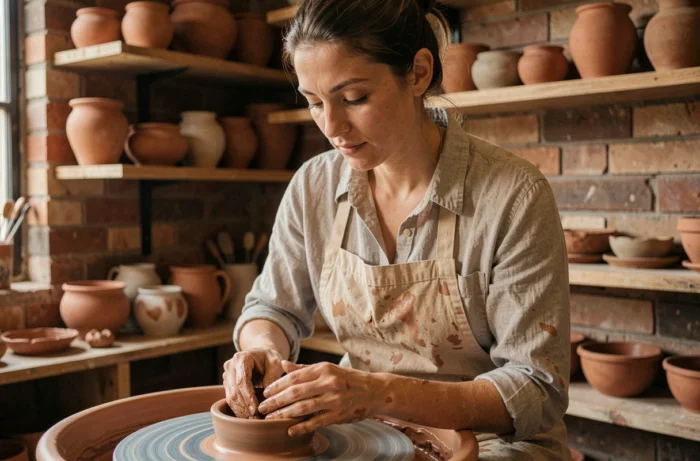
- The social dimension. Collective workshops for pottery, woodworking, or sewing are multiplying in medium-sized towns, creating meeting spaces around a common project.
Woodworking, in particular, attracts an audience that goes beyond the traditional profile of the handyman. The creation of practical objects (shelves, cutting boards, small furniture) combines technical learning and immediate satisfaction. Video tutorials have made this activity accessible without prior training.
Outdoor hobbies and sports activities: the effect of seasons on actual practice
Outdoor hobbies remain highly dependent on the calendar. Hiking, cycling, or trail running experience peaks in spring and autumn, followed by a marked decline in winter and during extreme heat episodes.
The tourist demand related to outdoor leisure remains dynamic in France despite climatic tensions. Winter stays, particularly in collective accommodations, continue to grow. In contrast, summer heatwaves push some practitioners towards indoor activities or shifted time slots (early morning, evening).
This seasonal shift creates an opportunity for those looking to vary their leisure: combining a regular outdoor activity with an indoor hobby allows for a stable practice rhythm throughout the year. Indoor sports or group classes serve as a winter complement, while creative cooking or DIY take over during periods of intense heat.

Online courses and self-directed learning: a leisure format in its own right
Learning a new skill is no longer limited to professional training. Online courses have become a leisure activity in their own right, pursued for enjoyment rather than career goals. Botany, drawing, foreign languages, food fermentation: course platforms offer short formats (less than an hour per session) suitable for a free time slot.
This format is appealing because it removes two classic barriers: travel and long-term commitment. Unlike an in-person course that imposes a fixed schedule over several weeks, an online session fits into the available time. Progress remains visible through completed projects, which helps maintain motivation.
Conversely, self-directed learning through video (YouTube, free tutorials) works better for manual hobbies than for theoretical disciplines. Following a woodworking tutorial produces a concrete result from the very first session, whereas an online language course takes months before tangible progress is felt.
The choice of a sustainable hobby relies less on current trends than on three measurable parameters: the actual monthly budget, the available time per week, and the ability to practice without external constraints. Activities that tick these three boxes (manual creativity, cooking, online learning) are those that establish themselves over time, well beyond the trend effect.